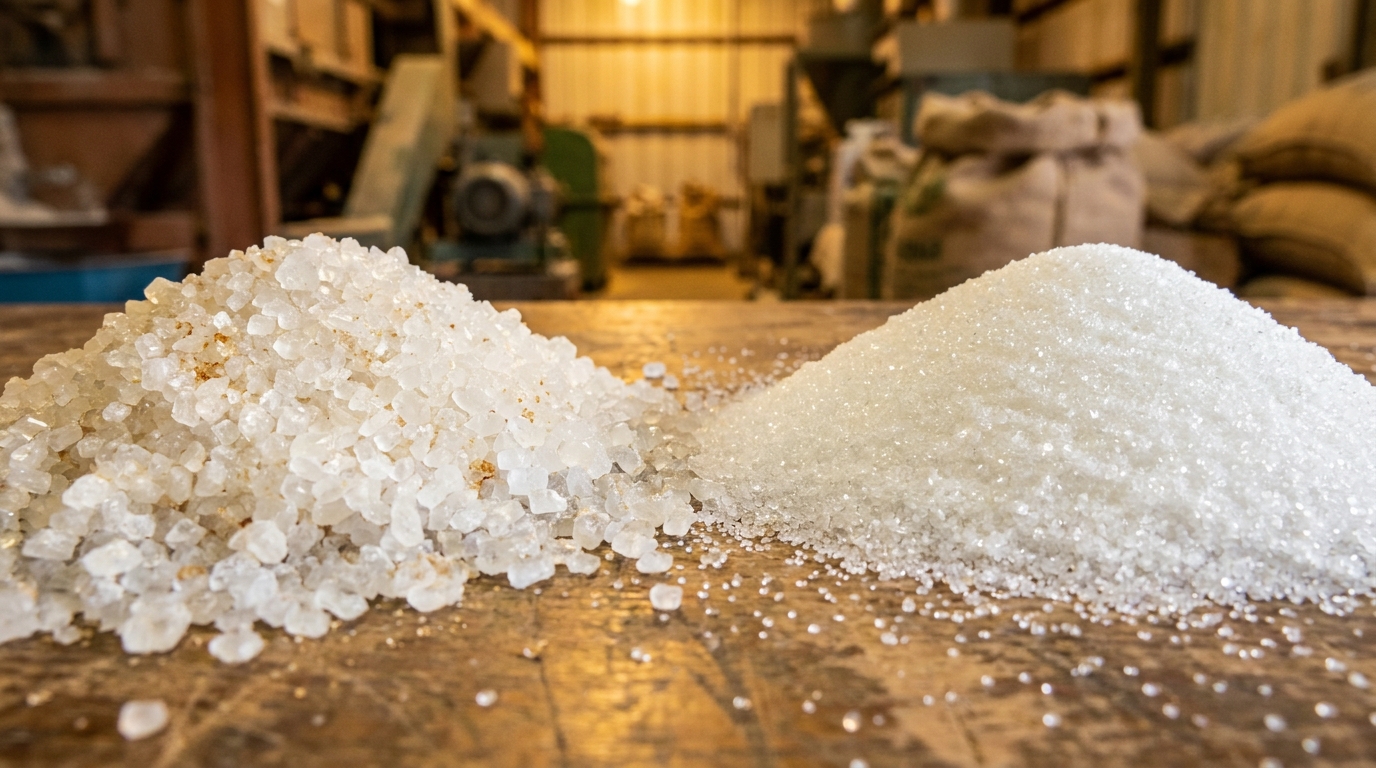
White Crystal Sugar vs Refined Sugar: A Buyer's Guide
White crystal sugar and refined sugar are often confused, yet they serve different purposes and markets. Both come from sugarcane, but they differ in purity, color, and intended use. For buyers in food manufacturing, retail, or distribution, understanding the difference helps you choose the right product and avoid costly mismatches. This guide explains both types and how to select between them.
- White crystal sugar (plantation white) suits general consumption
- Refined sugar has higher purity for industry
- Color is measured in ICUMSA units (lower = purer)
- Choose based on application and purity needs
- Specify ICUMSA, grain size, and packaging when ordering
What is white crystal sugar?
White crystal sugar, sometimes called plantation white sugar, is the everyday consumption sugar produced directly from sugarcane through crystallization. It has clean, uniform crystals and a white color suitable for household use, cooking, and many food applications. Because it is produced in a single processing stage, it is widely available and cost-effective for general use. It is the sugar most people recognize in kitchens and on retail shelves.
What is refined sugar?
Refined sugar undergoes additional purification steps to achieve very high purity and a clearer, brighter white color. This makes it ideal for industrial food and beverage manufacturing, where consistency, clarity, and dissolving behavior are critical. Refined sugar typically has a lower ICUMSA value, indicating fewer impurities. Producers of soft drinks, confectionery, and pharmaceuticals often require refined sugar to maintain consistent product quality.
Understanding ICUMSA color
ICUMSA is a standardized scale that measures the color and, by extension, the purity of sugar. A lower ICUMSA number means a whiter, purer sugar. Refined sugar has a low ICUMSA value, while white crystal sugar has a slightly higher one. When ordering sugar internationally, ICUMSA is one of the most important specifications to state, because it directly reflects the grade and intended use of the product.
Choosing the right sugar for your application
The right choice depends on your end use. For household consumption, retail, and general cooking, white crystal sugar is the practical, economical option. For large-scale beverage production, confectionery, or any application demanding the highest purity and consistency, refined sugar is the better fit. Matching the sugar grade to the application avoids both overpaying for unnecessary purity and underspecifying for a demanding process.
Grain size and packaging
Beyond purity, grain size and packaging matter. Different applications need fine, medium, or coarse crystals, and dissolving speed can depend on grain size. Packaging options range from retail-sized bags to industrial bulk bags and sacks. When you place an order, specify the grain size and packaging alongside the ICUMSA value so the product fits both your process and your handling requirements.
Specifying sugar in your order
To avoid misunderstandings, write the full specification into your purchase contract: the ICUMSA value, grain size, moisture, packaging, and quantity. State the Incoterms as well. A clear specification lets the supplier deliver exactly what your market and process require, and gives you a basis to inspect and accept the shipment with confidence.
Frequently Asked Questions
Is refined sugar healthier than white crystal sugar?
Both are sugar; the difference is in purity and intended use, not a health claim. Consumption should be moderate regardless of type.
What is ICUMSA?
ICUMSA is a standard scale for sugar color and purity. A lower number means a whiter, purer sugar.
Which sugar should beverage manufacturers use?
Refined sugar is usually preferred for its high purity and consistent dissolving behavior, which protect product quality.
Looking to import Indonesian sugar or molasses? Contact our export team for a quote and specifications.
Contact Us