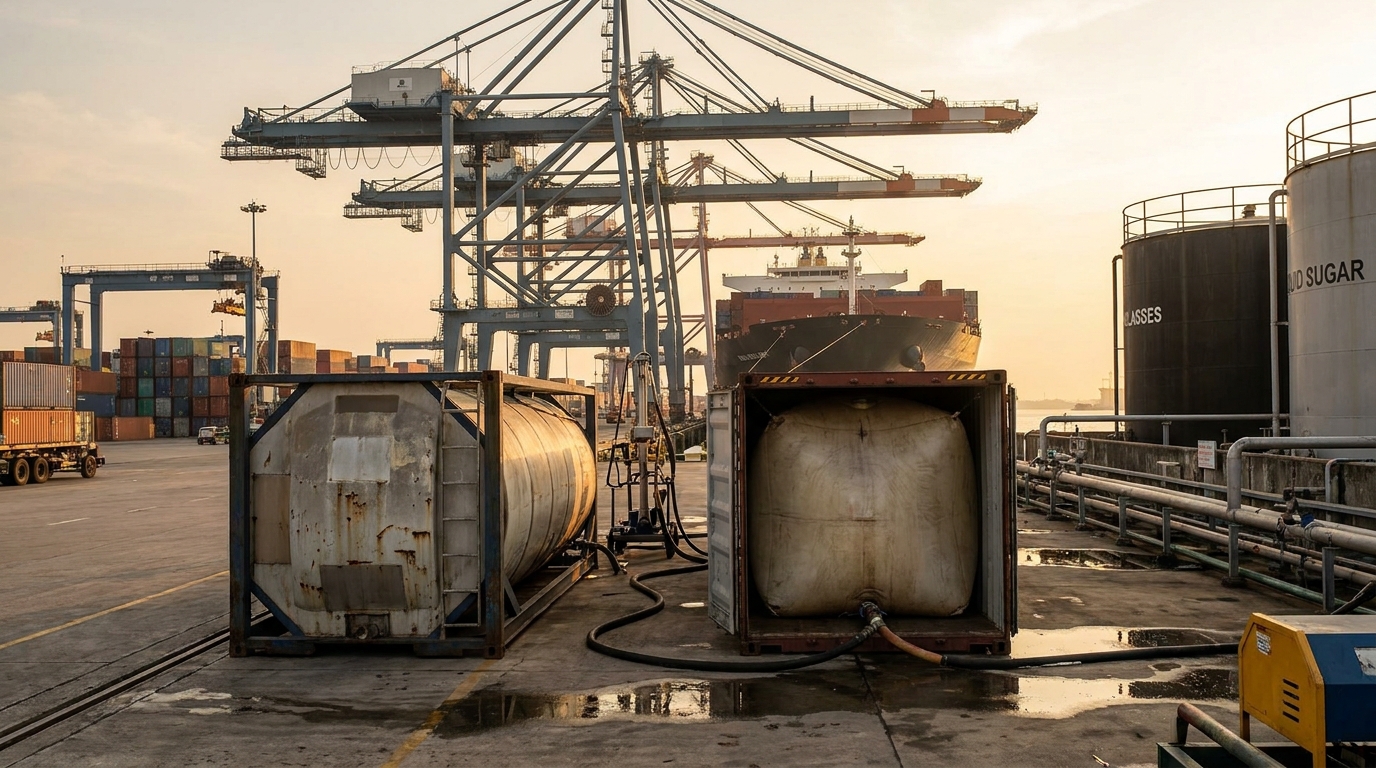
How to Import Molasses from Indonesia: Process, Documents & Costs
Importing cane molasses from Indonesia is straightforward once you understand the process and the special requirements of shipping a bulk liquid. From selecting a reliable supplier to clearing customs in your country, each step has best practices that protect your money and ensure the product arrives on specification. This guide breaks the process into clear stages for first-time and experienced importers alike.
- Start with clear specifications and an approved sample
- Agree Incoterms (FOB or CIF) before ordering
- Bulk liquid ships via flexitank, ISO tank, or drums
- Key documents: invoice, packing list, B/L, COO, COA
- Use secure payment terms such as L/C or partial deposit
Step 1 — Define your specifications
Every successful import begins with a precise specification. Decide on the minimum Brix, minimum total sugars (TSAI), maximum ash, packaging type, and intended use (feed, fermentation, or aquaculture). The clearer your specification, the easier it is to compare quotes accurately and the lower the risk of disputes. If you are unsure, a good supplier will help you translate your end-use into a workable specification. Put everything in writing so both parties share the same understanding.
Step 2 — Find and vet a supplier
Shortlist suppliers with genuine bulk-liquid export experience to your market. Beyond price, evaluate consistency, documentation, and communication. Request company details, sample Certificates of Analysis, and references.
- Confirm experience exporting molasses to your country.
- Request a representative sample and COA.
- Check capability for flexitank or ISO tank loading.
- Assess responsiveness and clarity of communication.
Step 3 — Samples and order confirmation
Before committing to a bulk order, approve a sample so you can verify the specifications against your needs. Once satisfied, confirm the order with a written contract or proforma invoice stating the full specification, quantity, price, Incoterms, payment terms, lead time, and packaging. This document is the reference point for the entire transaction, so make sure it is complete and unambiguous before you proceed.
Step 4 — Agree Incoterms and payment
Incoterms define who is responsible for freight, insurance, and risk at each stage. For molasses, FOB (you arrange ocean freight from the Indonesian port) and CIF (the supplier arranges freight and insurance to your port) are most common. Choose the one that fits your logistics capability. For payment, secure methods protect both sides — a letter of credit (L/C) is common for larger orders, while a deposit with the balance against shipping documents is also used.
Step 5 — Bulk liquid shipping
Because molasses is a bulk liquid, shipping requires special handling. It is typically loaded into flexitanks (heavy-duty liners inside standard 20-foot containers) or ISO tank containers, with drums used for smaller volumes. The choice affects cost and handling at your end. Discuss loading method, container weight limits, and any temperature or handling requirements with your supplier so the product arrives stable and ready to use.
Step 6 — Documents and customs clearance
Molasses shipments come with a standard set of documents. Confirm which ones the supplier provides and which your customs authority requires:
- Commercial invoice and packing list.
- Bill of Lading (B/L) from the shipping line.
- Certificate of Origin (COO).
- Certificate of Analysis (COA) confirming specifications.
- Any phytosanitary or other certificates required by your country.
Estimating your total landed cost
The price per ton is only part of the picture. Your true cost includes ocean freight, insurance, import duties and taxes, port and handling charges, and inland transport to your facility. For bulk liquids, the cost of flexitank or tank handling at destination also matters. Build a simple landed-cost calculation that adds these to the FOB price so you can compare suppliers and price accurately. Requesting a CIF quote can simplify this if you prefer the supplier to handle freight and insurance.
Frequently Asked Questions
How is molasses shipped from Indonesia?
Most commonly in flexitanks or ISO tank containers for bulk volumes, and in drums for smaller orders.
What is the difference between FOB and CIF?
With FOB you arrange and pay ocean freight and insurance from the Indonesian port; with CIF the supplier includes freight and insurance to your destination port.
What documents do I need to import molasses?
Typically the commercial invoice, packing list, bill of lading, certificate of origin, and Certificate of Analysis, plus any certificates your country requires.
Can you ship full container loads to my country?
Yes, bulk liquid export by flexitank or ISO tank is standard. Contact us with your destination and specifications for a quote.
Looking to import Indonesian sugar or molasses? Contact our export team for a quote and specifications.
Contact Us