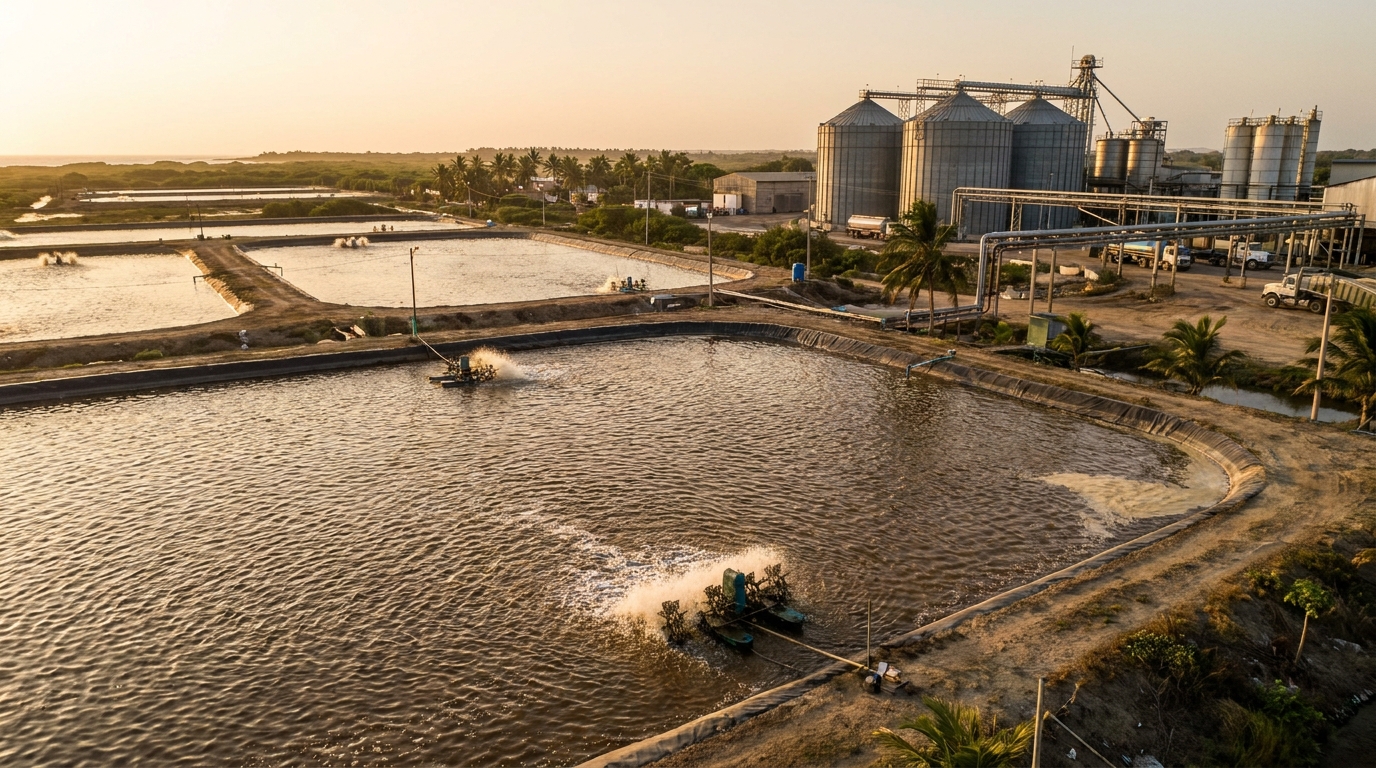
Cane Molasses in Aquaculture: A Practical Biofloc Guide
Cane molasses has become a key input in modern aquaculture, especially in biofloc systems used to farm fish and shrimp intensively. As an inexpensive carbon source, molasses helps grow beneficial bacteria that keep water healthy and provide supplementary natural feed. This guide explains the role of molasses in biofloc, its benefits, and how it is used in practice.
- Acts as a carbon source in biofloc systems
- Helps control toxic ammonia in pond water
- Grows protein-rich flocs as supplementary feed
- Reduces water exchange and feed costs
- Dosed according to the carbon-to-nitrogen (C/N) ratio
What is biofloc and the role of molasses
Biofloc is an aquaculture system that uses heterotrophic bacteria to process waste in the pond. These bacteria need a carbon source to convert toxic ammonia — produced by uneaten feed and fish waste — into clumps of bacterial biomass called flocs, which are rich in protein. Molasses supplies that carbon affordably. By balancing the carbon-to-nitrogen (C/N) ratio of the water, molasses keeps the system stable and the water healthy without constant water changes.
Controlling ammonia and water quality
Ammonia is one of the biggest threats in intensive aquaculture, as it is toxic to fish and shrimp. In biofloc, adding molasses as a carbon source stimulates bacteria to take up ammonia and convert it into harmless biomass. This keeps ammonia at safe levels and stabilizes water quality, reducing the stress and disease that plague conventional high-density farming. The result is a healthier environment that supports higher stocking densities.
Flocs as supplementary feed
A major advantage of biofloc is that the flocs themselves become a natural, protein-rich feed that fish and shrimp can consume. This recycling of waste into feed reduces the amount of commercial feed required — often the largest cost in aquaculture. By turning molasses-fed bacteria into edible biomass, farmers improve feed efficiency and lower their overall production costs, making biofloc both economical and environmentally friendly.
Dosing molasses by C/N ratio
The amount of molasses to add is calculated based on the carbon-to-nitrogen ratio, which depends on how much feed (and therefore nitrogen) enters the system. Molasses is usually diluted in water and distributed evenly, added gradually rather than all at once. Continuous aeration is essential so the aerobic bacteria can work and flocs form properly. Monitoring floc volume and water parameters allows farmers to fine-tune the molasses dose over the cycle.
Best practices for success
Successful biofloc requires discipline. Maintain aeration 24 hours a day, monitor key parameters such as ammonia, pH, and dissolved oxygen, and check floc density regularly using a settling cone. Avoid overdosing molasses, which can deplete oxygen as bacteria consume it. Starting with established dosing guidelines and adjusting based on conditions ensures the system stays balanced and the animals stay healthy throughout the cycle.
Why source molasses for aquaculture
Consistent molasses quality matters in aquaculture because it directly affects how reliably the biofloc system performs. A steady supply of molasses with known sugar content lets farmers dose accurately and avoid disruptions. Lentera Sugarcane provides molasses with stable specifications and dependable supply, supporting fish and shrimp farmers who rely on biofloc to raise healthy stock efficiently.
Frequently Asked Questions
Why does biofloc need molasses?
Because the bacteria that remove ammonia require a carbon source, and molasses provides it economically to form protein-rich flocs.
How much molasses is used in biofloc?
It is dosed according to the carbon-to-nitrogen ratio based on feed input. Follow biofloc guidelines and adjust to water conditions.
Which species suit biofloc with molasses?
It is most common for catfish, tilapia, and shrimp, but the principle applies to other intensive systems with adjustments.
Looking to import Indonesian sugar or molasses? Contact our export team for a quote and specifications.
Contact Us