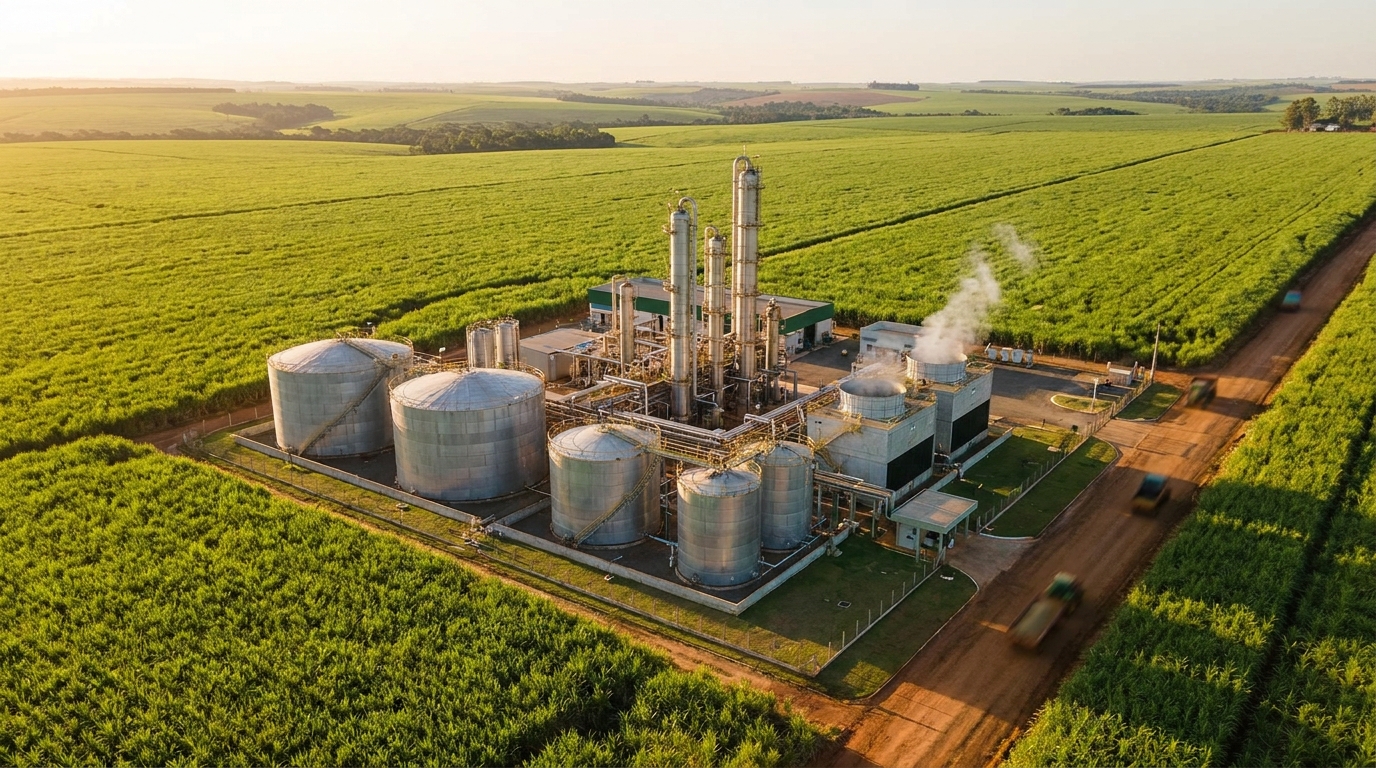
Bioethanol from Sugarcane: A Renewable Energy Feedstock
Sugarcane is one of the world's most important sources of bioethanol, a renewable fuel and versatile industrial input. Produced by fermenting the sugars in cane or molasses, bioethanol plays a growing role in clean energy and adds value to every part of the sugarcane crop. This article explains how bioethanol is made from sugarcane, its uses, and why it matters for a sustainable future.
- Made by fermenting sugarcane juice or molasses
- Used as renewable fuel (gasohol) and industrial solvent
- Reduces dependence on fossil fuels
- Adds value to sugarcane by-products
- Supports a zero-waste, sustainable sugar industry
How bioethanol is made from sugarcane
Bioethanol production starts with the sugars in sugarcane — either directly from cane juice or, more commonly, from molasses, the sugar by-product. Yeast ferments these sugars into ethanol, which is then concentrated through distillation. Because molasses is an inexpensive, sugar-rich by-product, it is a particularly economical feedstock. This process turns what was once a residue of sugar production into a valuable renewable fuel and chemical.
Bioethanol as a renewable fuel
As a biofuel, bioethanol helps reduce reliance on fossil fuels and lower emissions. It is often blended with gasoline to create gasohol, a cleaner-burning fuel used in many countries' renewable energy programs. Because it is derived from a renewable crop, bioethanol supports national agendas for energy security and decarbonization. Growing demand for cleaner transport fuels keeps interest in sugarcane bioethanol strong.
Industrial uses of bioethanol
Beyond fuel, bioethanol is widely used in industry. It serves as a solvent and raw material in pharmaceuticals, cosmetics, and chemical manufacturing, and as a base for many products. This versatility makes bioethanol a high-value output of sugarcane processing, opening multiple markets beyond the energy sector and improving the economics of cane production.
Bioethanol and sustainability
Producing bioethanol from molasses is a clear example of turning a by-product into value while supporting sustainability. By using residues rather than dedicated crops, the sugar industry maximizes the output from each cane stalk and reduces waste. Combined with the use of bagasse for energy, bioethanol helps the industry move toward a zero-waste, circular model that benefits both producers and the environment.
The role of reliable molasses supply
Continuous bioethanol production depends on a steady supply of fermentation feedstock. Any interruption in molasses supply can halt an ethanol plant and incur significant costs. Producers therefore value reliable, long-term molasses partnerships. A dependable supply of consistent-quality molasses is the foundation of efficient bioethanol production, which is why feedstock sourcing is a strategic priority for the industry.
Outlook for sugarcane bioethanol
With the global push toward renewable energy and lower carbon emissions, the outlook for sugarcane bioethanol remains positive. As fuel-blending mandates expand and industries seek bio-based inputs, demand for ethanol — and the molasses feedstock behind it — is likely to grow. For producers and buyers alike, sugarcane bioethanol represents a meaningful contribution to a cleaner, more sustainable economy.
Frequently Asked Questions
What is bioethanol made from?
It is made by fermenting sugars, commonly from sugarcane molasses, which are then distilled into ethanol.
What is gasohol?
Gasohol is a blend of gasoline and bioethanol, a cleaner-burning fuel used in many renewable energy programs.
Is bioethanol good for the environment?
As a renewable biofuel, it helps reduce emissions compared with pure fossil fuels and makes use of sugarcane by-products.
Looking to import Indonesian sugar or molasses? Contact our export team for a quote and specifications.
Contact Us