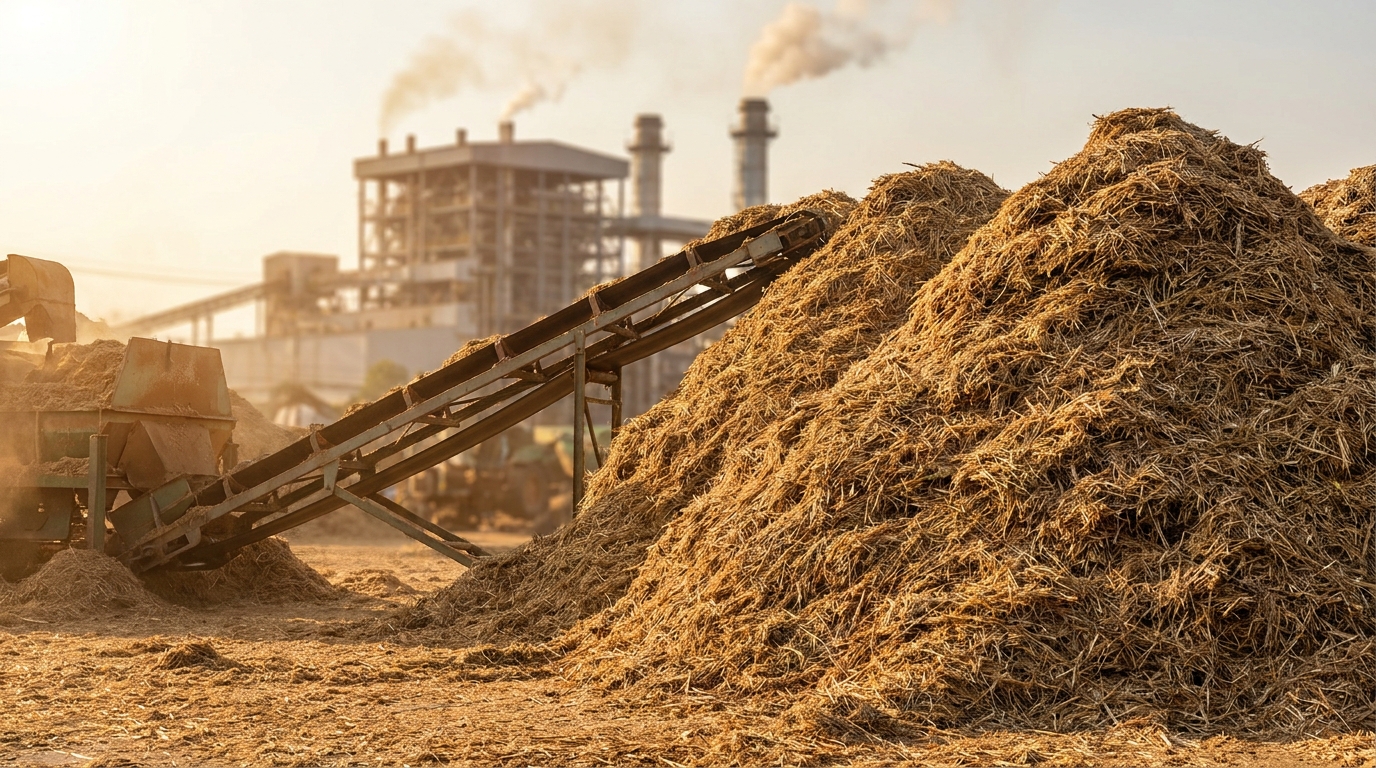
Bagasse: Uses in Biomass Energy and Paper Pulp
Bagasse is the fibrous material left after sugarcane is crushed to extract its juice. Far from being a waste product, bagasse is a valuable resource used for biomass energy and as a raw material for paper pulp. Its use is a prime example of zero-waste sugar processing, where every part of the cane delivers value. This article explains what bagasse is and how it is put to work.
- The fibrous residue from crushing sugarcane
- Burned as biomass fuel to generate steam and power
- Used as a raw material for paper pulp
- Reduces reliance on fossil fuels at sugar mills
- A clear example of zero-waste processing
What is bagasse?
Bagasse is the dry, fibrous matter that remains after sugarcane stalks are crushed and their juice extracted. For every ton of cane processed, a significant amount of bagasse is produced. Rather than discarding it, modern sugar mills recognize bagasse as a valuable by-product with energy and material applications. Its abundance and renewable nature make it an important part of the sustainable sugarcane value chain.
Bagasse as a biomass energy source
The most common use of bagasse is as a biomass fuel. Sugar mills burn bagasse in boilers to produce steam and electricity, often supplying much of their own energy needs. This reduces dependence on fossil fuels, lowers costs, and cuts emissions. In many cases, mills generate surplus electricity that can be exported to the grid, turning a processing residue into a clean energy resource and improving the mill's overall sustainability.
Bagasse for paper and pulp
Bagasse fibers can also be processed into pulp for making paper and packaging products. As demand grows for alternatives to wood-based pulp, bagasse offers a renewable, agricultural source of fiber. Using bagasse for paper adds another layer of value to sugarcane processing and supports more sustainable paper production, linking the sugar and paper industries through a shared renewable raw material.
Other emerging uses
Beyond energy and paper, bagasse is increasingly used in other applications. It can be molded into biodegradable tableware and packaging as an alternative to plastic and foam, and explored as a raw material for bioproducts and building materials. These emerging uses reflect a broader trend of valorizing agricultural residues, turning what was once burned or discarded into useful, eco-friendly products.
Bagasse and zero-waste processing
The use of bagasse embodies the zero-waste philosophy of modern sugar processing. Combined with the use of molasses for fermentation and bioethanol, bagasse ensures that virtually every part of the sugarcane plant is put to productive use. This circular approach reduces waste, improves efficiency, and supports environmental goals, making the sugarcane industry a model for resource valorization.
Why bagasse matters for buyers and partners
For buyers of sugarcane products and partners in energy or paper, bagasse represents both a sustainability story and a practical resource. Sourcing from producers who valorize bagasse signals a commitment to responsible, efficient processing. As industries seek renewable inputs and lower carbon footprints, bagasse-based energy and materials offer a compelling, sustainable option rooted in agriculture.
Frequently Asked Questions
What is bagasse?
Bagasse is the fibrous residue left after sugarcane is crushed and its juice extracted, valued as biomass and a raw material for paper.
Is bagasse environmentally friendly?
Yes. Using it for energy and materials supports zero-waste processing and reduces reliance on fossil fuels and wood pulp.
Can bagasse replace wood for paper?
Bagasse can be used as a renewable fiber source for paper and packaging, complementing or partly replacing wood pulp.
Looking to import Indonesian sugar or molasses? Contact our export team for a quote and specifications.
Contact Us