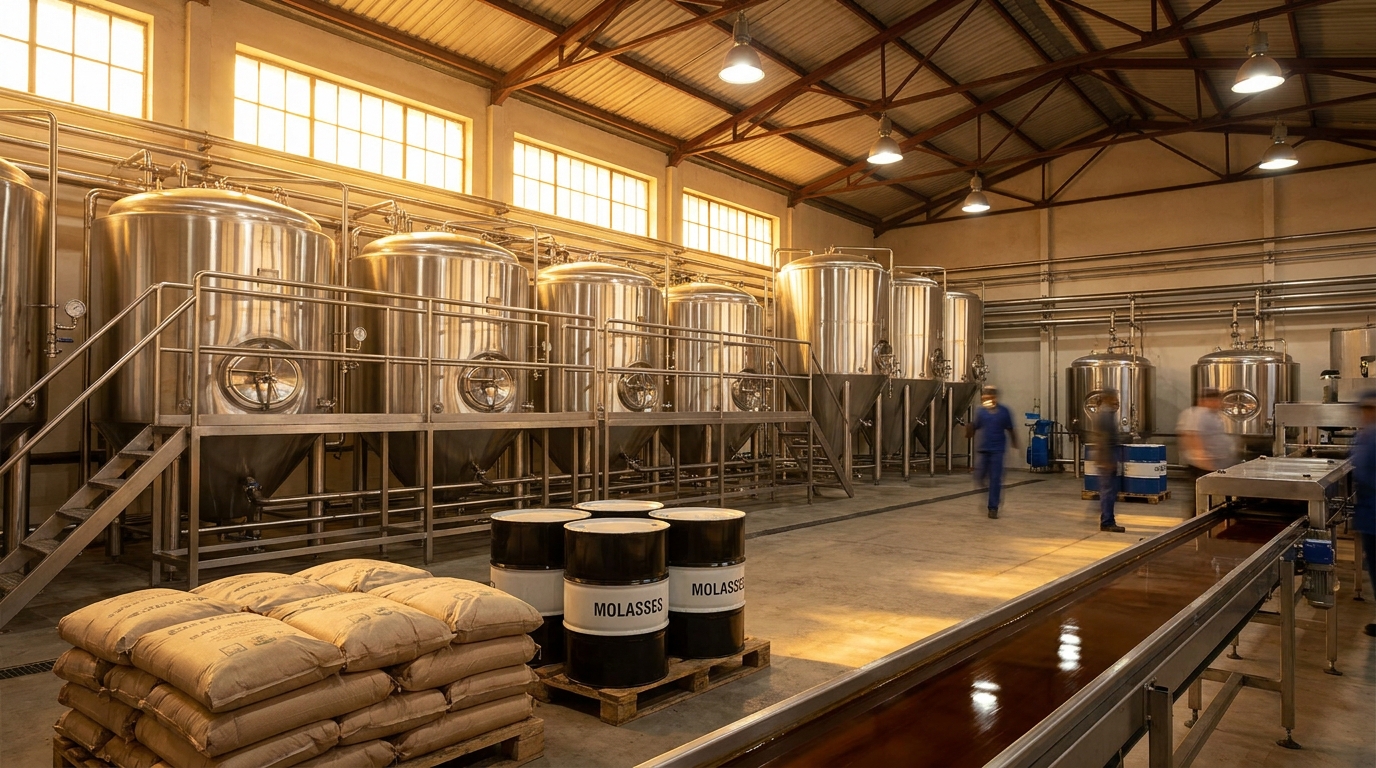
Molasses for Fermentation: Bioethanol, Yeast & MSG Feedstock
Cane molasses is one of the world's most important fermentation feedstocks. Its high content of fermentable sugars makes it an economical raw material for producing bioethanol, yeast, monosodium glutamate (MSG), organic acids, and many other fermentation products. For industrial buyers, understanding why molasses works so well — and which specifications matter — is key to securing a reliable supply. This article explains molasses as a fermentation feedstock and what to look for.
- Rich in fermentable sugars for microbial fermentation
- Feedstock for bioethanol, yeast, MSG, and organic acids
- Economical compared with refined sugar
- Total sugars (TSAI) is the key value driver
- Consistent supply is critical for continuous fermentation
Why molasses is a preferred fermentation feedstock
Fermentation relies on microorganisms — yeasts and bacteria — converting sugars into valuable products. Molasses is ideal because it is essentially a concentrated, low-cost source of fermentable sugars left over from sugar production. Rather than using expensive refined sugar, fermentation industries can use molasses to feed their microbes economically. Its availability as a by-product, combined with its rich sugar content, makes molasses the feedstock of choice for large-scale fermentation around the world.
Bioethanol production
One of the largest uses of molasses is producing bioethanol. Yeast ferments the sugars in molasses into ethanol, which is then distilled. Bioethanol serves as a renewable fuel — often blended with gasoline to make gasohol — and as an industrial solvent and raw material. With growing interest in renewable energy, demand for molasses as an ethanol feedstock remains strong, and reliable molasses supply is essential to keep ethanol plants running continuously.
Yeast and baking
Molasses is a primary nutrient source for growing baker's yeast and other yeast products. The sugars and minerals in molasses support rapid yeast propagation, making it a cornerstone raw material for the yeast industry. Consistent molasses quality directly affects yeast yield and quality, which is why yeast producers value suppliers who can deliver stable specifications shipment after shipment.
MSG and amino acids
Molasses is also a feedstock for producing monosodium glutamate (MSG) and other amino acids through fermentation. Microorganisms convert the sugars into glutamic acid and related compounds used widely in the food industry. Because these processes run at large scale and demand consistent inputs, molasses suppliers serving this sector must provide reliable volume and quality to avoid disrupting production.
Specifications that matter for fermentation
For fermentation, the single most important specification is total sugars (often TSAI), because it determines how much product can be made per ton of molasses. Brix indicates concentration, while low levels of substances that inhibit fermentation are preferred. A Certificate of Analysis lets buyers verify these parameters. Discussing your fermentation process with the supplier helps match the molasses to your microbial system and yield targets.
Securing a reliable supply
Fermentation plants typically run continuously, so a stable, uninterrupted molasses supply is critical. A break in feedstock can halt production and incur significant costs. Industrial buyers therefore value long-term supply relationships with producers who can guarantee volume and consistency. Establishing a rolling supply agreement and clear specifications helps ensure your fermentation operation never runs short of feedstock.
Frequently Asked Questions
Why use molasses instead of sugar for fermentation?
Molasses is far more economical than refined sugar while still rich in fermentable sugars, making it the preferred feedstock for large-scale fermentation.
What products are made from molasses fermentation?
Bioethanol, baker's yeast, MSG and amino acids, organic acids, and other fermentation products.
Which specification matters most for fermentation?
Total sugars (TSAI) is the key driver, since it determines product yield per ton of molasses.
Looking to import Indonesian sugar or molasses? Contact our export team for a quote and specifications.
Contact Us