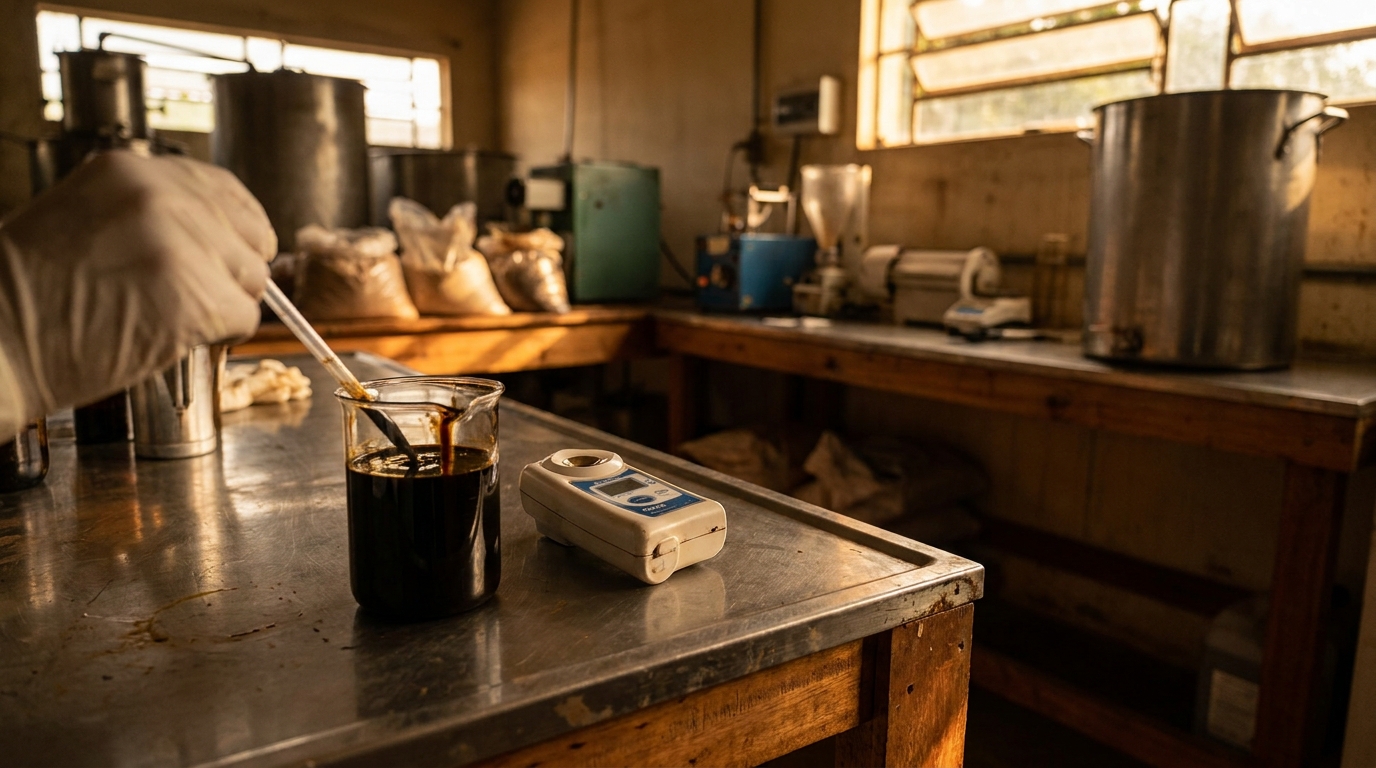
Molasses Specifications Explained: Brix, Total Sugars & Ash
When buying molasses, the specifications on the Certificate of Analysis tell you almost everything about its quality and value. Yet terms like Brix, TSAI, and ash can be confusing to newcomers. This guide explains the key molasses specifications in plain language, so you can compare offers accurately, define what you need, and avoid surprises when your shipment arrives.
- Brix measures dissolved solids (concentration)
- Total sugars (TSAI) measures fermentable sugar content
- Ash indicates mineral/inorganic content
- Moisture affects concentration and stability
- A Certificate of Analysis (COA) confirms each shipment
Brix — concentration of the molasses
Brix measures the percentage of dissolved solids in the molasses, giving an indication of its concentration. A higher Brix generally means a thicker, more concentrated product with less water. Buyers often specify a minimum Brix to ensure they are not paying for excess water. Brix is one of the first numbers to check on a Certificate of Analysis, as it sets expectations for the overall richness of the product.
Total sugars (TSAI) — the value driver
Total sugars, frequently expressed as TSAI (Total Sugars As Invert), measures the fermentable sugar content of the molasses. This is the single most important specification for most buyers, because it determines the value for both feed energy and fermentation yield. The higher the total sugars, the more energy or product you get per ton. When comparing two molasses offers, the one with higher total sugars typically justifies a higher price.
Ash content
Ash refers to the inorganic mineral content that remains after the organic matter is burned away. While molasses naturally contains minerals, very high ash can indicate lower-quality or contaminated product and may affect certain fermentation processes. Buyers in sensitive applications often specify a maximum ash level. Understanding the ash figure helps you judge purity alongside the sugar content.
Moisture and stability
Moisture content is closely related to Brix — more moisture means a more dilute product. Controlling moisture is important for stability during storage and shipping, since overly diluted molasses can be more prone to fermentation or spoilage in transit. A consistent moisture level also ensures the weight you pay for reflects actual molasses rather than excess water. Reputable suppliers control and report this parameter.
The Certificate of Analysis (COA)
The Certificate of Analysis is the document that ties all these specifications together for a specific shipment. It typically reports Brix, total sugars, ash, and other relevant parameters. Always request the COA and confirm that the delivered product matches it. A representative sample approved before shipment, combined with the COA, gives you confidence that what you ordered is what you receive.
How to specify molasses in your order
To avoid misunderstandings, write your required specifications into the purchase contract: minimum Brix, minimum total sugars (TSAI), maximum ash, and any other parameters important to your application. State the packaging (flexitank, ISO tank, drums) and Incoterms as well. A clear specification lets the supplier deliver exactly what you need and gives you a basis to inspect and accept the shipment.
Frequently Asked Questions
What Brix is normal for cane molasses?
Cane molasses is typically supplied at a high Brix indicating a concentrated product. Specify a minimum Brix in your contract to ensure consistency.
Is higher total sugars always better?
For most feed and fermentation uses, yes — higher total sugars mean more energy or product per ton, which usually justifies a higher price.
What is a Certificate of Analysis?
A COA is a document reporting the measured specifications (Brix, total sugars, ash, etc.) for a specific shipment, used to verify quality.
Looking to import Indonesian sugar or molasses? Contact our export team for a quote and specifications.
Contact Us